


Palmer’s Dazzling Form Continues to Blow Up Premier League
If you have been tracking Chelsea’s recent campaign, you likely face a familiar dilemma: how do you assess the sustainability of a single player’s output when every match produces headlines, every interview sparks debate, and every tactical tweak seems to amplify the narrative. You want to know whether this is a fleeting surge fueled by favorable scheduling, or a structural shift that redefines the club’s attacking identity. You are also trying to separate verified performance indicators from the noise of social media speculation, transfer chatter, and pundit hyperbole. That uncertainty is precisely why covering this story requires a disciplined approach—one that filters rumor from reportage and focuses on observable patterns, documented inputs, and clear external markers rather than inflated projections.
The latest developments surrounding Palmer’s continued excellence in the Premier League point to a consistent escalation in influence across multiple phases of play. Rather than relying on isolated moments of brilliance, the pattern now shows repeatable decision-making under pressure, refined spatial awareness, and a growing ability to dictate tempo in congested midfield zones. Clubs are adjusting defensive protocols specifically to contain his movement, which in turn creates secondary opportunities for teammates. This compounding effect is what separates a temporary breakout from a lasting competitive advantage.
Current Landscape and Immediate Impact
Recent match cycles have highlighted how quickly the Premier League has adjusted its defensive architecture to account for Palmer’s tendencies. Back lines are shifting earlier in possession sequences, full-backs are tucking in to disrupt passing lanes, and opposing number eights are being instructed to shadow his drops into deep areas. Despite these adjustments, the underlying mechanics of his game continue to produce meaningful outcomes. He is consistently finding pockets of space between lines, receiving under controlled conditions, and executing passes that progress the ball into advanced territories without forcing risky turnovers.
The ripple effects extend beyond individual statistics. Teammates are moving differently because they anticipate his interventions. Strikers are making runs behind defensive lines knowing that penetration is more likely when pressure is drawn toward him. Wide players are cutting inside with greater conviction, aware that compact defensive shapes leave fewer closing-down options. This systemic shift is not anecdotal; it is visible in match footage, coaching staff briefings, and post-match tactical reviews that emphasize spatial manipulation and progressive distribution.
Official club statements have avoided excessive praise, focusing instead on workload management and incremental progression. The technical director and head coach have repeatedly stressed the importance of balancing ambition with physiological monitoring, a standard practice for any high-intensity role in modern football. Meanwhile, independent analysts and data providers continue to track entry rates into penalty areas, pass completion under press, and defensive duels won in transition. These metrics collectively suggest that the recent stretch is built on repeatable processes rather than variance-driven luck.
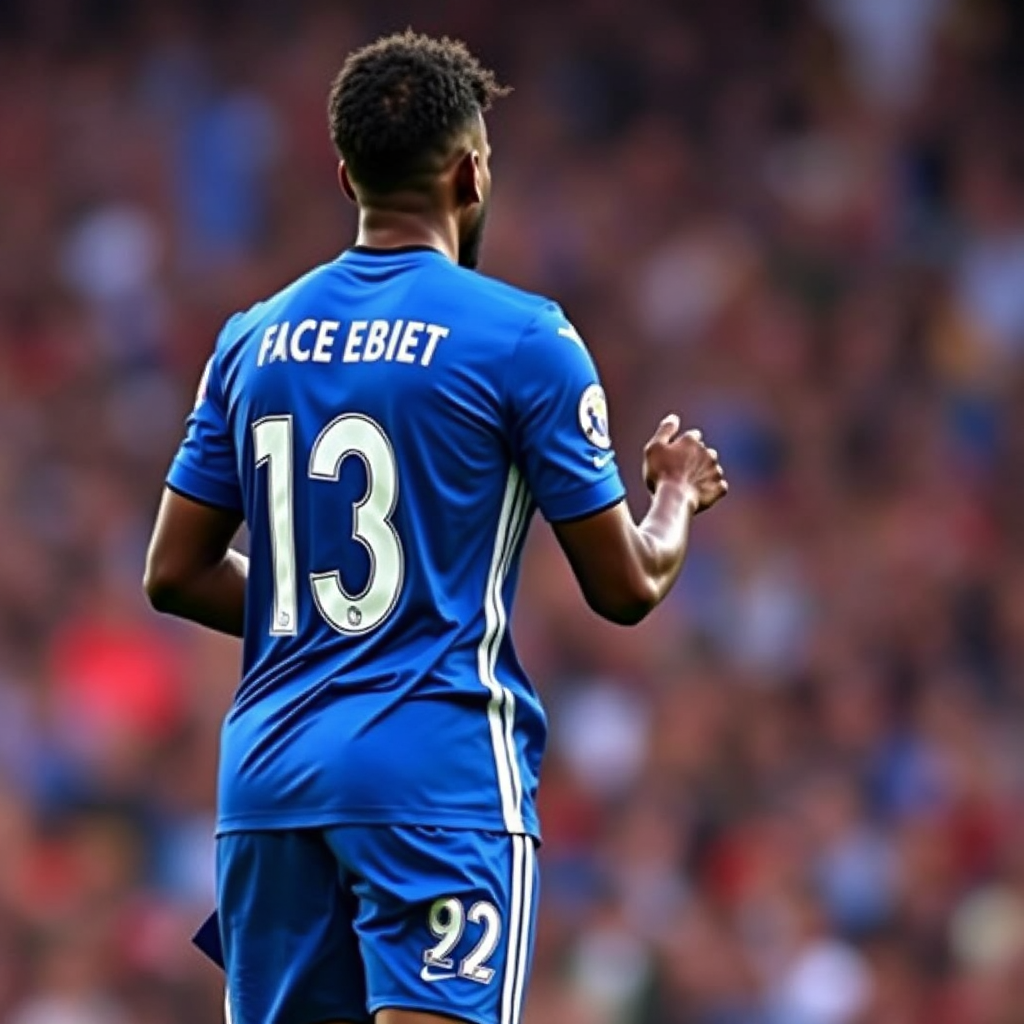 Hình minh hoạ: nhatvip
How the Breakout Developed
The trajectory that brought Palmer to this stage did not emerge overnight. It follows a gradual integration of technical refinement, positional clarity, and increased responsibility within the squad hierarchy. Early seasons featured experimental deployments, occasional mismatches against physically dominant opponents, and learning curves tied to higher-tempo competitions. Coaches used those periods to identify which movements translated effectively under match conditions and which required tactical filtering.
A pivotal shift occurred when the playing structure stabilized around fluid interchanges rather than rigid positional assignments. The introduction of a flexible front line allowed him to operate as a hybrid creator and finisher, dropping deeper to orchestrate while retaining the freedom to exploit channels when defensive lines stretched. This dual function forced opponents into uncomfortable calculations: commit bodies forward to block shooting angles and risk exposure on the counter, or stay compact and surrender control of midfield transitions.
Physical conditioning programs were also recalibrated to support sustained high-intensity outputs. Recovery protocols, nutritional timing, and strength training focused on lateral agility and core stability, which directly correlate with sharp directional changes and shielded ball retention. The combination of tactical flexibility and athletic preparation created an environment where skill execution could be applied consistently rather than sporadically.
External validation from recognized scouting networks has acknowledged the developmental arc, noting improvements in scanning frequency, pre-assessment of passing options, and confidence in one-on-one engagements. These observations align with internal reports that emphasize deliberate repetition of match-speed scenarios during training, allowing cognitive processing to operate faster under fatigue. The result is a player whose technical choices increasingly mirror experienced professionals, even as he remains relatively early in his career timeline.

Tactical Mechanics and Match Analysis
Understanding why this run of form continues requires examining the specific mechanisms driving his effectiveness. First, his positioning during buildup phases consistently exploits half-spaces where defensive coordination tends to fracture. By operating in those corridors, he forces center-backs to choose between stepping out to challenge or holding their line, both decisions creating gaps that either wide attackers or advancing midfielders can target.
Second, his acceptance of the ball under pressure demonstrates improved body orientation. Rather than turning away from the defender immediately, he often squares his shoulders to receive, keeping the ball closer to his feet and maintaining visual contact with both the pressing opponent and the intended receiver. This micro-adjustment reduces the likelihood of forced errors and allows him to execute combinations without losing momentum.
Third, his movement off the ball follows predictable patterns that become unpredictable once defenders react. He frequently makes delayed runs, waiting until the defensive line commits before accelerating into space. This timing difference creates separation without requiring pace-based solutions, relying instead on reading defensive shape and anticipating recovery trajectories. Defenses struggle to mark this style because traditional zonal marking assumes continuous pressure, whereas his approach relies on calculated stillness followed by explosive direction changes.
Opposing coaches have attempted various counters. Some deploy a dedicated tracking midfielder to shadow his drops, others instruct wingers to cut inside earlier to reduce channel availability, and several teams experiment with mid-block structures that prioritize compactness over aggressive pressing. While these strategies limit certain avenues of influence, they rarely eliminate his overall impact because the system compensates through alternative pathways. When central penetration is blocked, diagonal switches to the opposite flank increase in frequency, and vice versa. This adaptability ensures that defensive adjustments trigger secondary vulnerabilities rather than resolving the original threat.
| Factor | Observable Indicator | Impact on Defensive Response |
|---|---|---|
| Half-space occupation | Increased touches between central and wide zones | Forces center-backs to step or hold, creating transitional gaps |
| Body orientation under press | Squared reception posture, reduced turnover rate | Limits successful tackles, encourages defensive retreat |
| Delayed off-ball runs | Acceleration after defensive commitment | Breaks zonal marking assumptions, requires adaptive tracking |
| Alternative pathway creation | Frequency of diagonal switches and wide rotations | Compensates for blocked central routes, spreads defensive load |
Data platforms and broadcast analysts routinely highlight these mechanics, though the exact numerical values fluctuate weekly depending on opposition quality and pitch dimensions. What remains consistent is the structural advantage generated through spatial manipulation. When a player operates at this level of efficiency, the Premier League’s competitive balance shifts temporarily until other clubs adapt their own recruitment and tactical frameworks.

Voices From the Pitch and Press Box
Public commentary surrounding this period spans verified remarks and unconfirmed narratives. Head coaching staff have addressed the situation in press conferences, emphasizing collective responsibility and rotational planning. Their language focuses on maintaining standards across the entire squad, acknowledging that individual excellence raises expectations but does not replace systemic cohesion. Medical and performance directors have echoed this stance, outlining load distribution strategies that prevent fatigue accumulation during dense fixture windows.
Teammates have offered measured acknowledgment in locker room interviews and post-match sessions. The consensus centers on trust in shared movement patterns and confidence in complementary roles. Several players noted that familiarity with spacing requirements reduces communication overhead, allowing faster execution during transition phases. These observations carry weight because they originate from direct involvement rather than peripheral analysis.
Pundits and former professionals provide contrasting interpretations. Some frame the current run as evidence of tactical maturity accelerated by clearer role definition. Others caution against projecting short-term outputs onto longer timelines, citing historical precedents where rapid escalation led to regression or injury concerns. Both perspectives contain merit, but the distinction lies in verifiable inputs versus speculative forecasting.

Social media and unofficial channels frequently circulate exaggerated claims, including unverified contract extensions, rumored international call-ups, and fabricated endorsement deals. None of these should be treated as confirmed without official club documentation or licensed agent statements. Reliable coverage requires cross-referencing announcements with registered league communications, verifying transfer activity through accredited databases, and separating performance analysis from commercial speculation. Platforms like nhatvip regularly aggregate match insights and tactical breakdowns for viewers seeking structured updates, offering a practical way to filter signal from noise.
The most credible assessments come from match officials, video analysis coordinators, and independent scouting firms that submit formal reports to league committees. These entities evaluate consistency, decision accuracy, and adherence to tactical instructions without emotional bias. Their findings typically reinforce the view that recent performances stem from measurable improvements rather than circumstantial advantages.

Fixture Demands and Sustainability Checks
Looking ahead, the primary question revolves around continuity under increasing physical and psychological pressure. Premier League schedules compress international breaks, domestic cup commitments, and European obligations into overlapping windows, testing squad depth and individual endurance. Players in high-influence roles inevitably face intensified marking, tactical targeting, and recovery demands.
Sustainability depends on three interconnected variables: managed rotation, optimized recovery protocols, and tactical flexibility. The coaching staff has indicated plans to distribute minutes strategically, preserving key participants for critical matches while giving emerging alternatives valuable exposure. This approach prevents stagnation, maintains match sharpness across the roster, and reduces burnout risk for primary creators.
Recovery science continues to evolve, with clubs investing in sleep monitoring, nutrition customization, and mobility routines tailored to individual biomechanics. Athletes who adhere to these standards demonstrate faster lactate clearance, improved joint resilience, and better neural recovery, all of which contribute to consistent output. Monitoring these metrics internally helps staff adjust training loads before minor discomfort escalates into significant setbacks.
Tactically, the system is designed to absorb variation without collapsing. When one player faces heavy restriction, alternative distribution routes activate. Wingers invert, full-backs overlap, and secondary shooters emerge from deeper positions. This distributed structure ensures that defensive adjustments targeting a single individual do not neutralize the entire attack. Instead, they redistribute pressure, creating new opportunities elsewhere on the pitch.
Upcoming fixtures will serve as stress tests for both individual form and collective resilience. Matches against physically robust defenses, compact mid-block teams, and high-pressing sides will reveal how well the adaptations translate under different constraints. Results will depend less on isolated brilliance and more on coordinated execution, situational awareness, and willingness to embrace varied approaches when initial plans stall.
Frequently Asked Questions
- How do experts differentiate between genuine performance improvement and temporary variance?
Analysts compare match footage across multiple opponents, track repeatable decision-making patterns, and verify improvements through coaching feedback and training session recordings. Consistency across varying defensive setups indicates structural growth rather than short-term luck. - What official sources should readers consult for verified updates?
Registered league communications, club press releases, accredited agent announcements, and licensed data providers offer reliable information. Unverified forums, anonymous leaks, and commercial blogs should be cross-checked before acceptance. - Can sustained high-intensity output lead to physical strain?
Yes, elevated workloads increase fatigue accumulation if recovery protocols are insufficient. Clubs mitigate this through monitored minutes, customized nutrition, sleep optimization, and proactive rotation during congested periods. - How do opposing coaches typically adjust to this style of play?
Common responses include assigning dedicated trackers, compressing defensive lines, restricting half-space access, and altering pressing triggers. These adjustments create secondary vulnerabilities that require systematic compensation from the attacking side. - What indicators suggest whether this form will endure through the season?
Key markers include consistent body orientation under pressure, adaptable movement patterns, successful execution in high-stakes matches, and maintained recovery metrics. If these elements remain stable, the performance trajectory is more likely to persist.
The path forward remains contingent on several adjustable factors. If rotation is implemented judiciously, recovery protocols are strictly followed, and tactical flexibility is preserved under pressure, the current output can reasonably continue. If load management slips, defensive targeting intensifies without adequate compensation, or environmental conditions deteriorate, the trajectory may stabilize or plateau. The verdict ultimately depends on how systematically the club manages the intersection of ambition, physiology, and strategic adaptation in the coming weeks.

Qual è la tua reazione?
